Winterizing pipes in Lipan starts with knowing where water remains exposed when the weather changes. A home, well enclosure, barn, guest building, and outdoor faucet can have different risks even on the same property. October is a useful planning window, but the forecast and the condition of your plumbing should guide the timing. Do not wait for water to stop flowing before finding the shutoff or checking an unheated building.
This guide separates safe homeowner preparation from work that needs a qualified plumber, irrigation professional, or well-system technician. It covers hoses, exposed pipes, occupied homes, and vacant buildings without assuming that opening a few faucets drains every part of a system. The goal is to identify weak points and arrange the right repairs before freezing weather, not to promise that one checklist makes any property freeze-proof.
Start With a Lipan Property Walk-Through
Begin with the locations that fall outside the home's heated space. Include outdoor faucets, a garage with water lines, laundry connections against exterior walls, accessible piping near foundation openings, and buildings served by separate branches. On a well-fed property, include the enclosure and visible supply connections without opening electrical controls.
Make a simple map showing the main building, any outbuildings, and known homeowner-operated shutoff valves. Mark what each valve serves only when you are certain. An unidentified valve is something to ask about, not something to turn experimentally while equipment is running.
Record where past freezes or leaks occurred. A repaired section may still be exposed to the same cold air, damaged insulation, or loss of heat. Repairing a split is not the same as correcting the condition that allowed it to freeze.
Choose a dry day and stay in safe, accessible areas. Do not enter a crawl space with standing water, damaged wiring, animals, or unstable access. You can tell a professional where the concern is without reaching every pipe yourself.
For homes with more than one resident, make sure the plan is understandable to someone who did not make the map. Label confirmed controls clearly, keep access paths open, and identify who will call for help. A useful winter plan should not depend on one person being home.
Separate Homeowner Tasks From Professional Work
The American Red Cross frozen-pipe guide recommends removing outdoor hoses, protecting exposed piping, maintaining indoor heat, and draining relevant outdoor lines according to the equipment's instructions. The details depend on the installation. A general checklist should not override a system's manual.
| Area | Safe preparation to consider | Work that needs system-specific guidance |
|---|---|---|
| Garden hoses | Disconnect, drain, and store them | Repairing a damaged or leaking faucet |
| Accessible indoor piping | Identify missing or damaged insulation | Rerouting pipes or repairing concealed leaks |
| Irrigation | Find the manual and installer information | Blowout, backflow-device service, and valve settings |
| Well enclosure | Observe gaps, moisture, and equipment condition | Electrical work, pressure controls, and heater selection |
| Vacant building | List every water-using appliance and branch | A complete shutdown and recommissioning plan |
Take notes rather than improvising when a component is unfamiliar. A valve that will not move, an unidentified discharge pipe, or a damaged cable is a reason to stop and ask for help. Forcing a component during preparation can create the problem you were trying to avoid.
Keep the checklist specific to the building's use. A heated home occupied every day is not winterized in the same way as a vacant cabin. A barn with livestock water also cannot simply be shut down without another safe water arrangement.
Outdoor Faucets and Hoses in Lipan
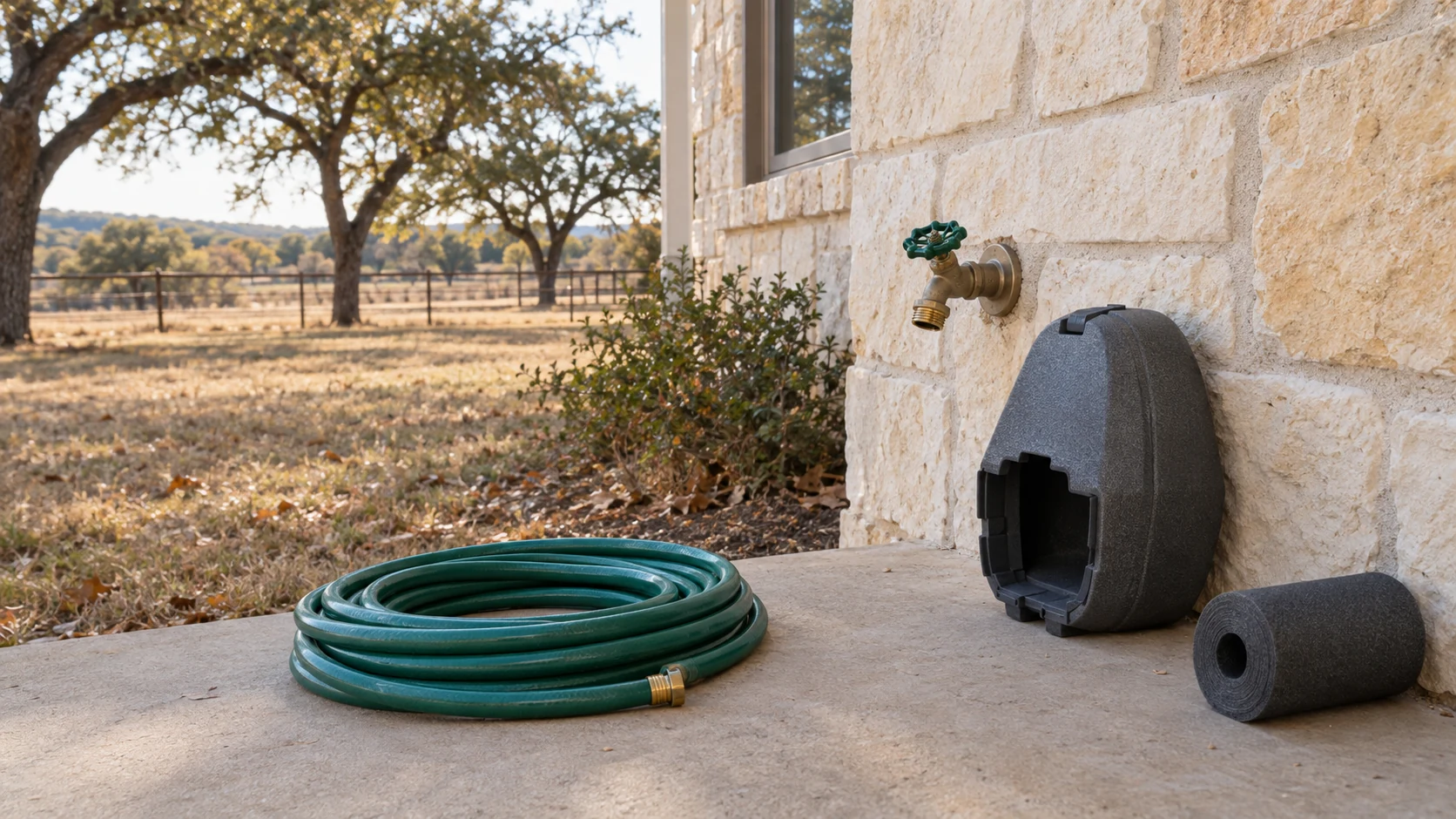
Remove hoses and attachments that can prevent an outdoor faucet from draining as designed. Drain and store the hoses separately. Look for visible damage or continued dripping, and note any faucet that has leaked into a wall or crawl space before.
A frost-free faucet still depends on correct installation and use. For example, Woodford's Model 17 guidance requires downward pitch toward the outdoor nozzle and hose removal in freezing weather. It does not call for the faucet to slope back toward the house.
That is a reason to have a questionable installation checked, not an instruction to loosen and reposition a faucet yourself. A frost-free label does not prove that the valve was installed with the necessary drainage or that its inlet remains adequately protected.
For a conventional outdoor faucet with a separate indoor isolation valve, follow the installation's draining instructions. Do not assume every faucet has that arrangement. If you do not know where the branch starts or what else it supplies, have the system identified first.
Use an appropriately fitted insulating cover where recommended, and check that it is intact. A cover is an additional protective measure, not a replacement for repairing a leak or correcting a drainage problem. After a freeze, inspect safely for new leakage when the faucet is used again.
Irrigation and Backflow Devices Need Their Own Plan
An irrigation system can retain water in locations that are not obvious from the yard. The correct shutdown procedure depends on its design, drain points, controls, and backflow protection. Ask the installer or an appropriately qualified irrigation professional for the procedure that applies to your system.
This guide does not recommend a homeowner compressed-air blowout or universal settings for backflow-device valves and test cocks. Pressurized air and incorrect handling can damage equipment or create an injury hazard. Follow the applicable manufacturer's instructions and professional guidance rather than a generic sequence.
Keep backflow equipment accessible and protected in the way its manufacturer permits. Do not block relief openings or drains with a makeshift enclosure. If you find freeze damage, have the device evaluated and any required testing handled before returning the system to use.
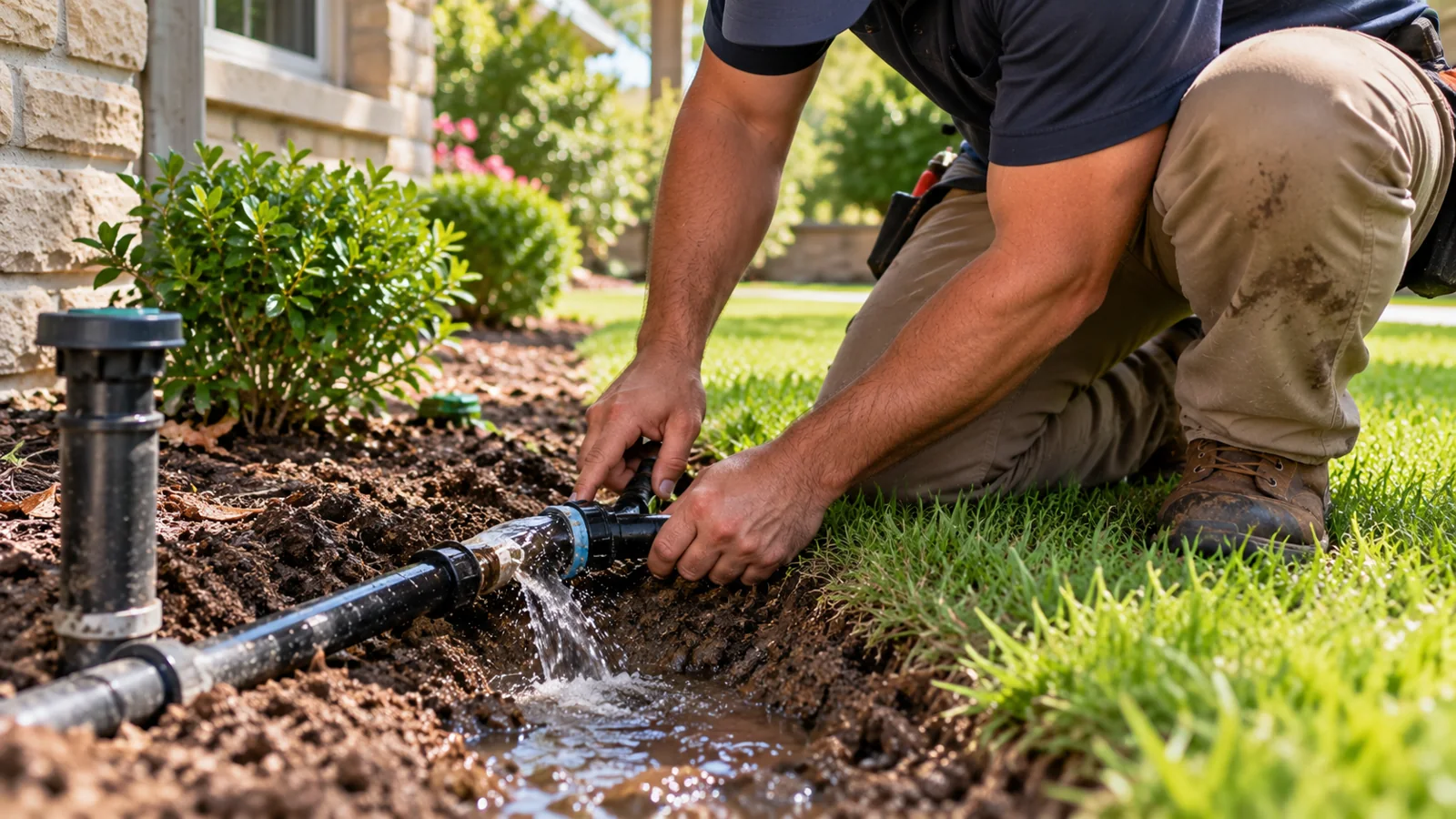
Unusually wet ground after a freeze can justify investigation, but it does not prove an irrigation line is the source. Iron Horse's leak detection service can help assess hidden plumbing leaks. Tell the office what you observed and whether the area stays wet when irrigation is off.
Avoid digging blindly to find a suspected break. The location of the visible wet spot may not match the source, and other underground services can be nearby. Describe the change and arrange the appropriate evaluation before excavation.
Well Enclosures, Pressure Equipment, and Outbuildings
For Lipan properties on a private well, identify the parts of the supply system outside conditioned space. Observe the enclosure, exposed piping, and signs of moisture without removing electrical covers or changing pressure settings. Ask a qualified well-system professional about equipment-specific protection.
An enclosure may need repairs to reduce unwanted cold-air entry, but do not seal required ventilation or cover components indiscriminately. Pressure switches, electrical equipment, relief devices, motors, and other parts have access and installation requirements. Wrapping everything in insulation is not a safe universal solution.
If heat is part of the protection plan, use equipment selected and installed for that location. Do not rely on an improvised heat lamp, open flame, damaged extension cord, or unattended household heater in a damp enclosure. Have electrical and fire-safety concerns addressed by an appropriately qualified professional.
Include remote faucets, animal-water lines, and outbuildings in the review. Ask whether a yard hydrant actually drains as intended and whether the surrounding installation supports that function. A familiar handle or a “frost-proof” description does not verify the condition of buried components.
Where a building will not use water during winter, ask for a complete shutdown plan. Isolating a supply and opening a faucet may leave water in low sections, appliances, valves, or equipment. The plan should also explain how the system will be returned to service safely.
Occupied Homes, Crawl Spaces, and Exposed Piping
Maintain heat in an occupied home and pay attention to pipes in garages, exterior-wall cabinets, and other colder areas. The Red Cross advises keeping the thermostat consistent during severe cold and leaving heat on when away. Indoor thermostat settings do not guarantee that an isolated pipe cavity stays warm enough.
Opening appropriate sink cabinet doors can allow warmer room air to reach plumbing. Move cleaning products and other hazards out of children's reach first. Keep garage doors closed if water lines are located there, while preserving any required ventilation for equipment.
Accessible pipe insulation should be suitable for the pipe and installed according to its instructions. Identify missing sections, damaged joints, and exposed fittings for review. Insulation reduces heat loss; it does not create heat or guarantee protection during prolonged freezing conditions.
Do not indiscriminately seal crawl-space vents. Moisture control, ventilation, combustion equipment, and local requirements need consideration. Ask the appropriate professional how to protect the piping without creating a different building-safety problem.
Heat cable is also a product-specific installation, not a reason to wrap any available electrical heater around a pipe. It must be listed and approved for the material and application, with the required power protection and installation clearances. Damaged cable or an uncertain installation belongs with a qualified professional.
Iron Horse's residential plumbing services include pipe repair, re-pipes, and hose-bib or outdoor plumbing. Report the exposed section and any existing leak so repairs can address the actual condition before insulation conceals it.
Know the Water Shutoff Before a Freeze
Identify the homeowner-operated main shutoff and any separate valves for outbuildings. The correct location varies by installation. A utility-owned meter valve should not be treated as a routine homeowner control without the utility's direction.
Do not force a corroded, leaking, or stuck valve. Have its condition assessed before you depend on it in an emergency. Make sure the location can be reached without moving heavy storage or entering an unsafe area.
On a private well, know which controls have been identified by the installer for safe use. Turning off the pump does not immediately remove water already under pressure in the tank and piping. Have the correct isolation procedure explained for your system rather than assuming one breaker or valve does everything.
Keep the property address and emergency contact information with the plan. If a neighbor checks an empty building, explain what they should observe and when to call, without asking them to troubleshoot electrical equipment or operate unfamiliar controls.
Vacant Lipan Homes Need More Than Open Faucets
A house that will sit empty needs a deliberate choice between maintaining heat with monitoring and carrying out a proper shutdown. Ask your plumber and other equipment professionals which approach suits the building, appliances, and length of vacancy. Either approach still needs a plan for inspections and unexpected failures.
For a heated property, the Red Cross recommends leaving the heat set no lower than 55 degrees Fahrenheit while away. This is general prevention guidance, not a guarantee for every pipe location. Remote temperature or water alarms can add information, but they depend on their power and communication arrangements.
For a shutdown, account for water heaters, washing machines, dishwashers, ice makers, treatment equipment, pumps, and fixture traps. The correct steps vary by model and system. Opening the highest and lowest taps does not establish that all of those components are empty.
Do not pour automotive antifreeze into household plumbing. If a professional recommends a plumbing-specific winterization product for an approved application, follow the exact product and equipment instructions. Do not add chemicals to drinking-water lines or other equipment as an improvised precaution.
Confirm how the property will be recommissioned. The plan should include checking for leaks, following appliance startup instructions, and confirming a storage heater is properly filled before operation. An empty building needs a return-to-service checklist as well as a shutdown checklist.
What to Do When a Pipe May Be Frozen or Burst
A trickle or loss of water during freezing weather may indicate a frozen section, but supply or equipment problems can produce similar symptoms. Check only accessible areas from a safe location. If you cannot identify the problem or suspect a concealed break, call for advice rather than opening walls or using aggressive heat.
Never use a torch or other open flame to thaw piping. Do not use electrical heating equipment where water creates a shock hazard. For an accessible, apparently intact pipe in a dry area, follow established safe thawing guidance; when the condition is uncertain, leave the work to a professional.
If water is escaping, protect people before belongings:
- Keep everyone away from standing water near wiring, outlets, appliances, or a panel.
- Close the accessible homeowner-operated water valve only if you know its function and can reach it safely.
- Do not enter water to reach a breaker or operate wet electrical equipment.
- Keep clear of unstable ceilings, sewage, and damaged structures.
- Call for emergency plumbing help and describe the location and hazards.
For a burst or suspected frozen pipe in Lipan, call the Stephenville office at (254) 965-6789. Iron Horse's emergency plumbing service covers burst and frozen pipe problems. If there is a suspected gas leak, leave immediately and call emergency services and the gas provider from a safe location instead of investigating.
Water Heaters and the Fall Service Conversation
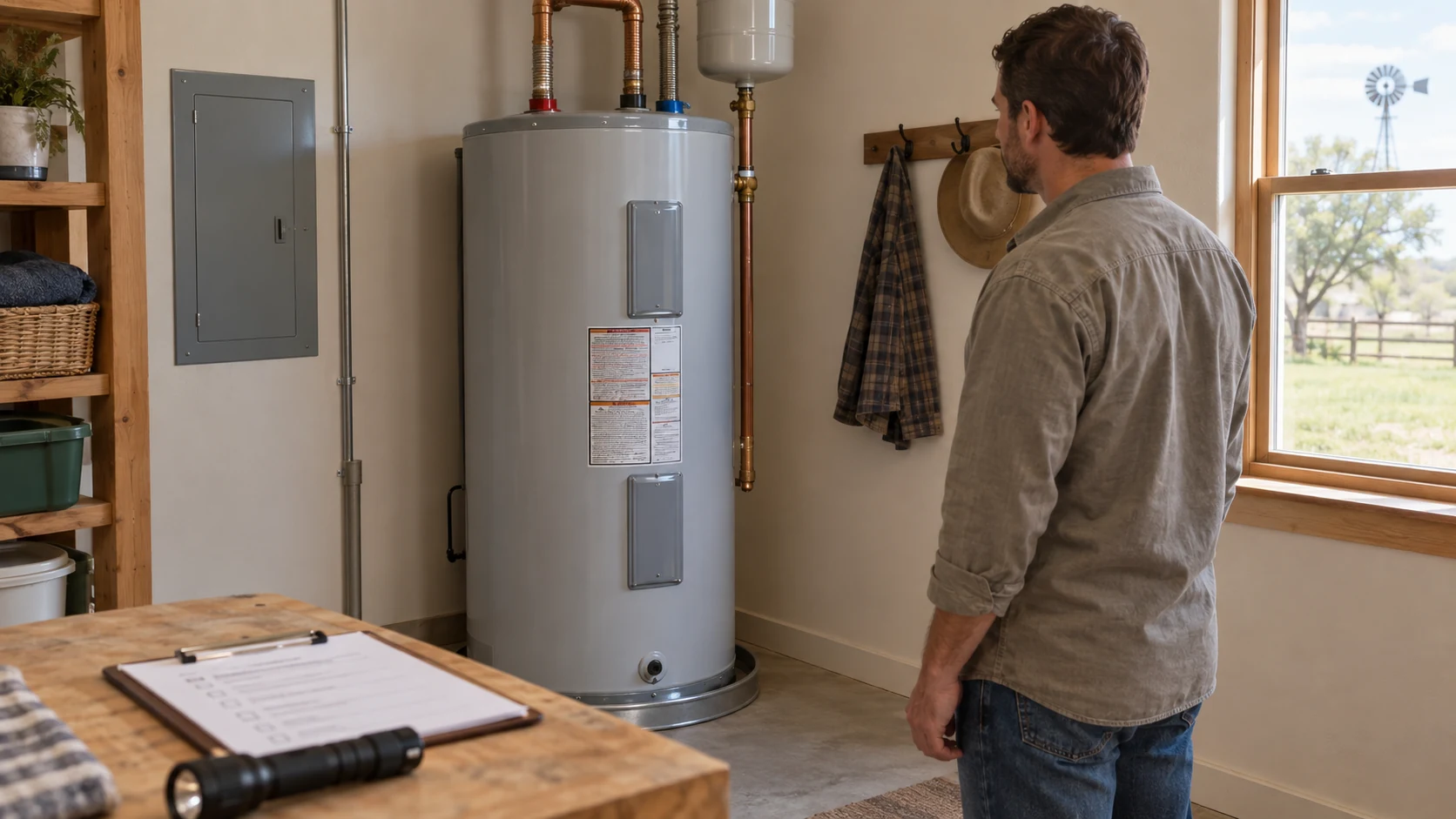
Include the water heater's location and exposed connections in the property review. From a safe, dry position, note visible moisture, staining, unusual sounds, and changes in hot-water performance. Those observations justify a diagnosis; they do not prove that winter will cause the heater to fail.
Do not drain a heater or change gas and electrical controls as an improvised freeze precaution. Follow the model's shutdown and startup instructions with qualified help when needed. Never operate an electric storage heater before it is correctly filled, and never obstruct a relief-valve discharge path.
Iron Horse's water heater service includes component repairs, sediment issues, and replacement. Explain whether the heater serves an occupied home or an unused building so the recommendation addresses the actual winter plan.
The Lipan service-area page identifies Stephenville as the serving office for local plumbing needs. Scheduled service runs Monday through Saturday, 7:00 AM to 6:00 PM, with emergency plumbing available 24/7. Call (254) 965-6789 to discuss concerns before a freeze and confirm which work is appropriate for the property.
Frequently Asked Questions About Winterizing Pipes in Lipan
For broader questions about service and scheduling, see our plumbing FAQs. The answers below focus on preparing a Lipan property for freezing weather.
When should Lipan homeowners prepare pipes for winter?
Start before freezing weather is forecast, leaving time to identify valves, inspect exposed areas, and arrange repairs. October is a useful planning window, not a guaranteed deadline based on a fixed first-freeze date. Check the forecast and prioritize known vulnerabilities. An occupied house and an unused outbuilding may need different preparation plans.
Does a frost-free outdoor faucet still need attention?
It does. Correct installation, drainage, hose removal, and protection of the inlet all matter. A faucet can be labeled frost-free and still be vulnerable if it cannot drain as designed. Follow the model's instructions and have a leaking or questionable installation assessed. Do not loosen the faucet to adjust its slope yourself.
Should a homeowner blow out an irrigation system?
An irrigation blowout should follow the system manufacturer's instructions and be handled by a qualified professional equipped for that work. There is no universal air setting or backflow-valve position suitable for every property. Ask the installer about the correct procedure, and do not improvise with compressed air or unfamiliar test cocks.
Is shutting off the main enough for a vacant home?
Closing the supply can limit additional water entering the building, but it does not prove the plumbing is drained. Water may remain in appliances, heaters, pumps, low piping, and fixture traps. Arrange a complete plan for the specific property, including safe equipment shutdown and the steps required before water and appliances return to service.
What should happen first if a pipe bursts in Lipan?
Keep people away from electrical and structural hazards. Close a known homeowner-operated valve only if it is safely accessible, then call for emergency plumbing help. Do not enter standing water to reach a switch or move damaged appliances. Tell the office whether water is still escaping and describe any unsafe conditions at the property.
Does dripping one faucet protect every pipe on an acreage?
A drip at a faucet served by an exposed line can help during severe cold, but it is not a guarantee or protection for every branch. A separate barn, irrigation line, or well enclosure still needs its own plan. Follow utility guidance and system-specific advice, and do not rely on a drip instead of repairing known vulnerabilities.
Topics