Frozen pipes in Stephenville can leave a faucet without water, but a burst pipe can also release water after the weather warms. If water is escaping, shut off your home's water supply only if you can reach the valve safely, keep everyone away from wet electrical equipment, and call for help. Do not enter standing water or a flooded crawlspace to investigate. This guide explains the difference between a suspected frozen line and an active leak, which exposed areas deserve attention, and what information helps a plumber assess the problem. It covers older homes, newer construction, and rural Erath County properties without assuming every home has the same piping or shutoff arrangement. The priority is protecting people first, limiting water damage second, and arranging a repair that addresses both the failed pipe and its exposure to cold.
Where Frozen Pipes Can Develop in Stephenville
Water expands as it freezes, placing pressure on the pipe or fittings containing it. Ice can also block a line and trap water, so damage may occur somewhere other than the most visibly exposed section. A blocked faucet does not reveal exactly where the ice or a possible split is located. The American Red Cross frozen-pipe guide identifies exposed outdoor plumbing, unheated spaces, and poorly insulated exterior-wall piping as common trouble spots.
Check the following areas for exposure before cold weather. This is a property checklist, not a ranking of local failure rates:
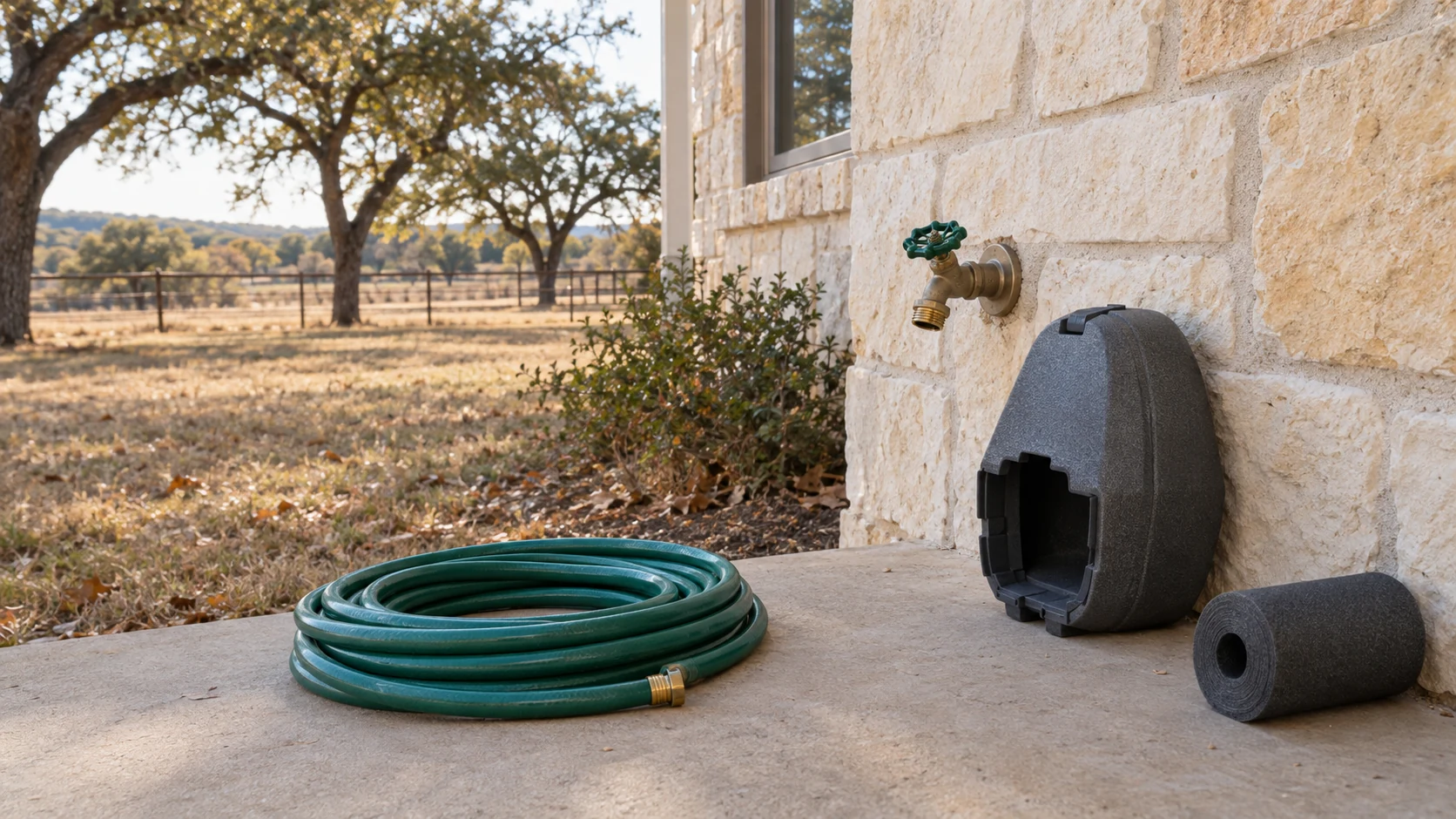
- Hose bibs and outdoor spigots, especially older ones without a frost-proof stem, and any bib left with a hose attached so the valve cannot drain
- Pipe in unheated crawlspaces under pier-and-beam homes, where wind moves freely under the floor
- Supply lines in exterior walls where insulation is missing or cold air enters
- Attic runs, including plumbing serving additions or remodeled rooms
- Well houses, pressure tanks, and pump lines on rural properties
- Unheated garage and utility room lines, including washer connections and water softener loops
- Irrigation backflow assemblies and above-ground irrigation pipe
Exposure, insulation, indoor heat, and the length of the freeze all affect risk. Wind moving through gaps can speed heat loss from exposed plumbing, but a forecast temperature alone cannot tell you whether a particular line is safe. Do not rely on a fixed number of hours below freezing or assume that a pipe which survived the last cold front will survive the next one.
The First Ten Minutes After a Pipe Bursts
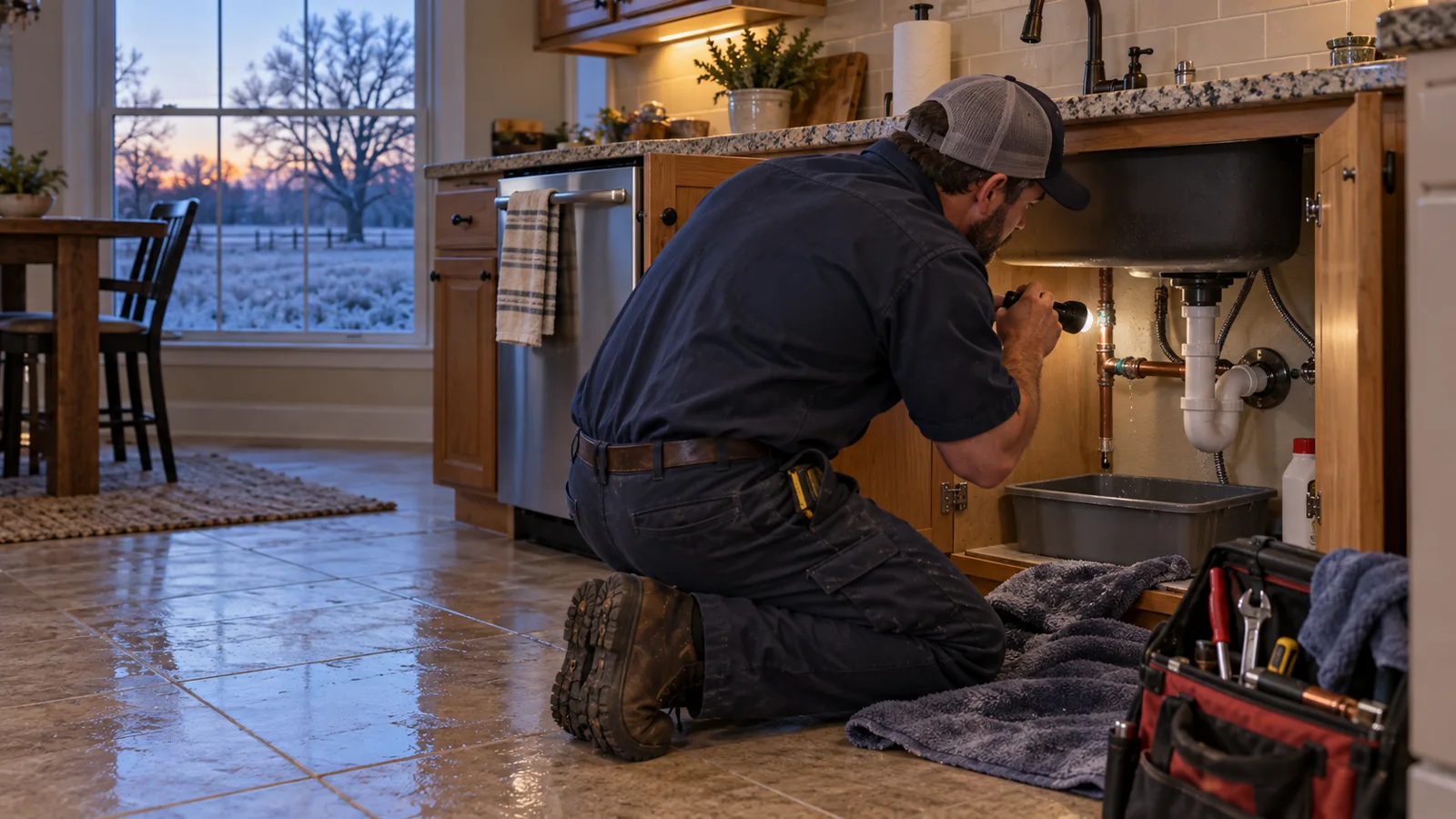
If you hear unexplained running water, see a spreading ceiling stain, or find water coming through flooring, assess immediate hazards before approaching. Stay out of flooded areas and away from sagging ceilings. If you smell gas, leave immediately without using switches, phones, flames, or appliance controls inside; call 911 and your gas utility from a safe location. That takes priority over shutting off water.
- From a safe, dry location, close the accessible homeowner-operated main water valve. If it is stuck, unidentified, or unsafe to reach, do not force it or enter the hazard. Call for help.
- Keep people and pets away from water near outlets, wiring, appliances, or a panel. Do not touch a wet panel or attempt electrical work. Ask emergency responders, the utility, or a qualified electrician to make the area safe.
- After the supply is isolated, open an accessible faucet to relieve residual pressure. Do not enter a flooded space to reach one, and do not assume every branch has drained.
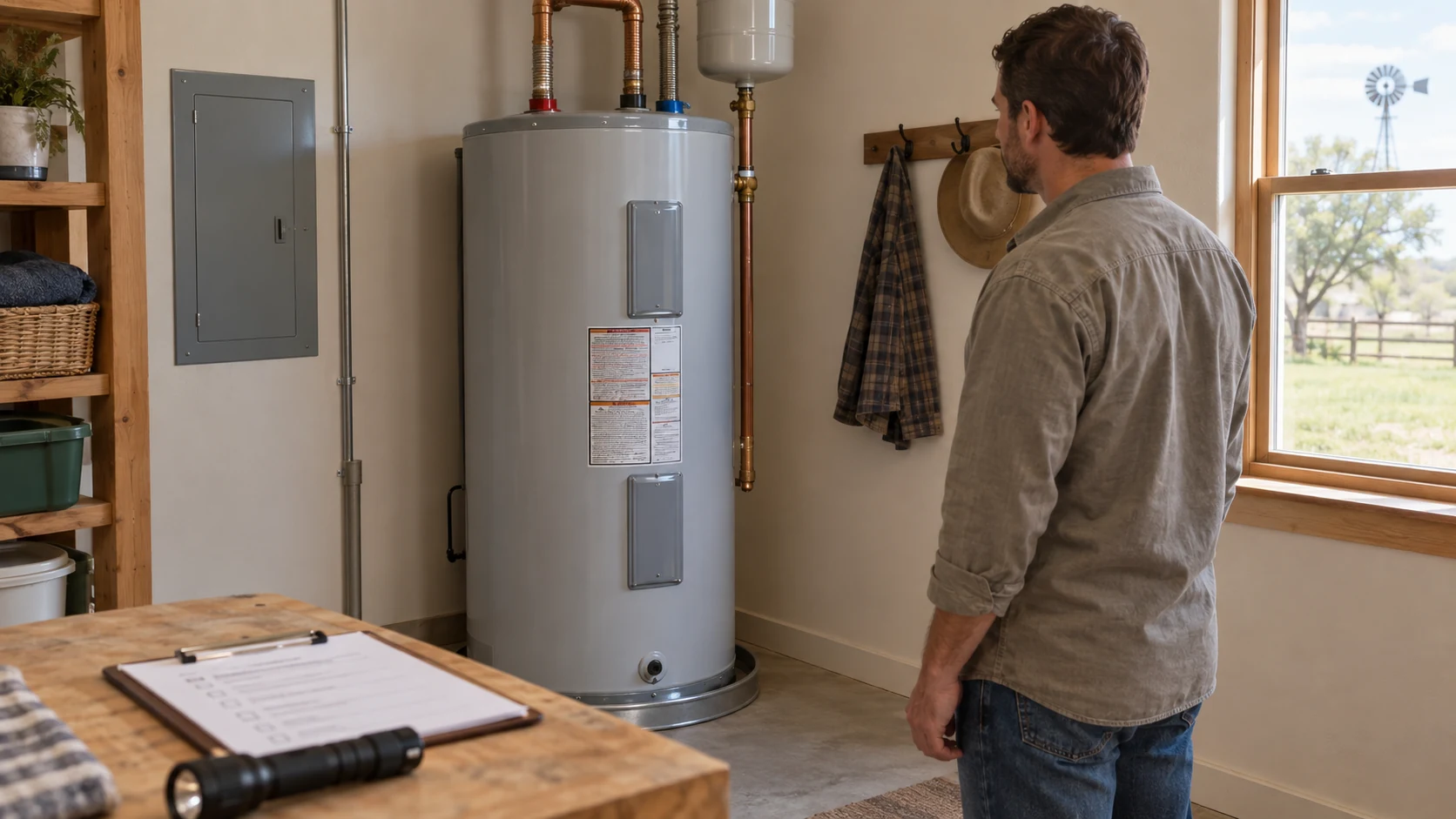
- Do not operate water-damaged appliances or relight a flooded gas appliance. Have the equipment inspected before reuse. Tell the plumber if the water heater has lost its water supply so its shutdown and restart can be handled appropriately.
- Call us. Burst lines are exactly what our 24/7 emergency service exists for, including weekends and holidays. Our Stephenville office line is (254) 965-6789, and calling directly gets the fastest response.
- Move belongings and photograph damage only where it is safe. Keep clear of sewage, unstable ceilings, and wet electrical equipment. Plumbing repair and structural drying may require different specialists.
What not to do: do not use an open flame on a frozen pipe, and do not keep flipping the main back on to check whether the leak stopped. It has not stopped. Water finds the path it already opened.
Our emergency plumbing service covers burst and frozen pipe repair, water shutoff, and help locating a shutoff valve. When you call, describe whether water is still escaping and whether you can safely isolate the supply. Emergency availability does not mean a promised arrival time; give the dispatcher the facts needed to assess the situation.
Find Your Shutoff Valve Today, Not During the Freeze
Locate the homeowner-operated main shutoff before the next cold front. Its location varies: it may be where the supply enters the building, in a garage or utility area, or outside. Identify it with a plumber if you are unsure. A utility-owned meter valve is not automatically a homeowner-operated valve; ask the water provider about its rules rather than assuming you should operate it.
A corroded or long-unused valve may not close completely and may leak when moved. Do not force one with tools. Arrange an inspection if it binds, leaks, or will not isolate the water. Shutoff-valve work is part of the residential plumbing services we provide. Label the confirmed valve and show the adults in your household how to reach it safely.
On a private well, shutting off the pump does not necessarily remove water pressure already stored in the tank. Have a qualified professional identify the correct pump disconnect and isolation valve for your system. Do not open a pressure tank, remove fittings, or work on pump wiring as part of an emergency homeowner check.
Older Plumbing: What Condition Tells You
Stephenville includes older homes, newer neighborhoods, and rural properties with different plumbing materials. Age can prompt a closer inspection, but it cannot tell you where a pipe will fail or whether the entire home needs new piping. A house may have original plumbing in one area and newer replacement lines elsewhere.
When a plumber examines damaged piping, the useful questions concern its condition: Is corrosion limited to one connection? Are there multiple previous patches? Are nearby fittings sound? Is the damage concentrated in an exposed section? Those observations are more useful than assuming that every old metal pipe will fail before every newer plastic one.
A water-supply leak and a drain leak also require different diagnoses. Supply lines deliver pressurized water; drainage problems may involve standing wastewater, blockages, or damaged joints. Sewage odor or a wet area under a house should not automatically be labeled freeze damage. Keep clear of contaminated water and let the plumber identify the source.
No plumbing material should be treated as freeze-proof. Pipe, valves, and connections all need appropriate protection. Even if a visible section looks intact, concealed fittings or another branch may be damaged. Restoring flow is not the same as confirming that the system is leak-free.
Keep records of previous repairs and tell the plumber which areas have been replaced. Repeated failures justify reviewing the affected run and its cold exposure, but do not automatically establish a need for a whole-house re-pipe. Ask what evidence supports the recommended scope.
Rural Ranch Properties in Erath County Carry Different Risks
The rural side of our service area fails differently than the in-town side. Across Erath County the plumbing on farm and ranch properties is spread out - a well house, a pressure tank, a long buried run to the home, frost-free hydrants at pens and troughs, often a barn or shop with its own supply. Every one is a freeze exposure, and most are out of sight until they are not.
For properties in Huckabay, include farm and ranch plumbing, well-house piping, and outbuilding supplies in the inspection plan. A hydrant labeled frost-free still needs correct installation, drainage, and maintenance. Follow the manufacturer's directions and have questionable drainage checked rather than assuming the label means protection in every condition.
In Morgan Mill, private wells and longer rural pipe runs make a system map useful: identify what supplies the house, livestock areas, and other buildings. Around Selden, include well-fed plumbing and remote fixtures in that same review. A change in pump cycling or an unexplained wet area deserves assessment, but neither symptom proves that a pipe froze.
Practical steps for acreage before a hard freeze:
- Have a qualified professional assess well-house insulation and any heating equipment
- Protect exposed piping with products approved for the pipe material and installed to manufacturer instructions
- Have frost-free hydrants checked if you cannot confirm proper drainage
- Disconnect and drain hoses at every bib, including pens and outbuildings
- Isolate and drain barn or shop supply lines you do not need in winter
- Arrange a system-specific winterization plan for an empty property; closing a valve alone does not drain every line, appliance, or tank
Telling a Slow Leak From a Burst
Not every freeze failure announces itself. Some pipes crack while frozen and only leak once the ice thaws and pressure returns, which is why a second wave of calls arrives a day or two after the cold breaks. Others leak into a wall cavity or under a slab and show up as symptoms rather than water.
Signs that point to a hidden freeze crack:
- A meter dial that keeps moving with every fixture in the house closed
- Water pressure that dropped after the cold snap and never came back
- A warm or damp spot on a floor, or a section of slab warmer than the rest
- Sounds of running water inside a wall when nothing is on
- A jump in water usage compared with the same month last year
- Mildew smell, buckling flooring, or a stain spreading across a ceiling
These are clues, not a diagnosis. Our leak detection services include pressure testing and acoustic equipment to help locate hidden water loss. The access needed depends on the property and the damaged section; no inspection method guarantees a repair without opening a wall, floor, or other surface.
When Homeowner Thawing Is Appropriate
If a faucet produces only a trickle during freezing weather, inspect only areas you can reach safely. Know where the water shutoff is before attempting anything. Do not try to thaw a visibly split pipe, a concealed line, or plumbing in a flooded or unsafe space.
For an accessible, apparently intact section in a dry area, keep the affected faucet open and use gentle warmth, such as towels soaked in warm water. An electric hair dryer is another method listed by the Red Cross, but it must not be used around standing water, wet wiring, or anywhere water could contact the appliance or cord. Never use a torch, open flame, or fuel-burning heater to thaw plumbing.
Remain with the pipe and watch for leakage as flow returns. If water escapes, isolate the supply if safe and call a plumber. If you cannot locate or reach the frozen section, cannot thaw it safely, or are uncertain about the setup, stop. Do not cut into walls or crawl under a wet house to continue.
When It Is a 24/7 Emergency and When It Can Wait
Active water loss or an unsafe situation should not be postponed until regular hours. Call for emergency plumbing help when:
- Water actively running from a break or spraying inside a wall, ceiling, or crawlspace
- Water near electrical panels, outlets, or a furnace
- No ability to shut the water off, or a main valve that will not close
- Sewage is backing up into the house
- A well pump running continuously with no fixture open
Gas odor is a separate emergency. Leave the area immediately, do not operate switches or gas valves, and call 911 and your gas utility from a safe location, as described in Atmos Energy's gas-leak safety guidance. A plumber's service call is not a substitute for that emergency response.
For a stable, isolated problem, call to discuss a planned appointment. Examples include:
- A previously frozen fixture after normal flow has returned and no leak is apparent
- A dripping outdoor bib that you have isolated
- A gate valve that binds and needs replacing before the next front
- A follow-up evaluation after a leak has been isolated and the property is safe
- Post-freeze inspection of a crawlspace or well house
No flow during a freeze still deserves prompt advice because damage can remain hidden until thawing. Describe the symptoms rather than deciding urgency from this list alone. We offer free estimates on most non-emergency plumbing projects; call to confirm whether your proposed work qualifies.
Repair, Replace, or Re-Pipe After a Freeze
After the leak is controlled, ask the plumber to explain both the repair and the cause. A damaged section surrounded by sound piping may justify a localized repair. Multiple leaks, widespread deterioration, or repeated failures may justify replacing a longer run. Pipe material alone cannot settle that decision.
Discuss how the repaired line will be protected from the same exposure. Insulation, air leaks, an unheated space, or a poorly protected fixture may need attention even after new pipe is installed. Ask how the work will be checked before normal use resumes. Iron Horse is locally owned and works under Texas Master Plumber License M-37011; our about page provides company background.
Getting Help in Stephenville and Across Erath County
Iron Horse serves Stephenville and nearby Erath County communities. Our Stephenville service area page outlines local plumbing services. When you call, provide the property address, whether it uses a private well or public water, which fixtures are affected, and whether the main supply is isolated.
For frozen or burst pipes, call our Stephenville office at (254) 965-6789. Emergency plumbing service is available 24/7, including weekends and holidays. If water is escaping, close the accessible water shutoff only if safe, stay clear of electrical hazards, and tell us what is happening. For prevention work, call to arrange an assessment before the next freeze.
Frequently Asked Questions
At what temperature do pipes freeze in Stephenville?
There is no single outdoor temperature that predicts a pipe failure. Exposure, insulation, indoor heating, and the duration of cold all matter. Plumbing in unheated or exposed areas deserves attention during freezing weather. Do not use a brief forecast or the fact that a line survived a previous freeze as proof that it is protected.
How can you tell if a pipe burst under a Stephenville home?
Unexplained running-water sounds, a lasting pressure change, damp flooring, or meter movement after normal water uses are stopped can indicate a leak. None identifies the cause by itself. Stay out of wet crawlspaces and away from electrical hazards. A plumber can assess the system and recommend testing to locate the loss before deciding how to access the piping.
Do you handle burst pipes at night and on weekends?
Yes. Iron Horse provides 24/7 emergency plumbing service, including weekends and holidays, for burst and frozen pipes and related water-shutoff needs. Call the Stephenville office and describe any active water loss, whether the supply is isolated, and any safety hazards. Availability is not a guaranteed arrival time; the office can explain the next steps.
Does an older Stephenville home automatically need a re-pipe?
An older home does not automatically need a re-pipe. Age is a reason to inspect the system, not enough evidence to prescribe whole-house replacement. Older homes may contain several generations of piping. The decision should reflect the condition of the affected run, previous failures, soundness of nearby connections, and the exposure that caused the problem. Ask for an explanation of the recommended scope.
What should a homeowner do first when water is pouring in?
Keep people clear of danger and close the homeowner-operated main water valve only if you can reach it safely. Do not enter standing water or touch wet electrical equipment. If you smell gas, leave immediately and call emergency services and your gas utility from a safe location. Once the area is safe, arrange emergency plumbing help.
Is a re-pipe or a single repair the right call after a freeze?
That depends on the damage and the surrounding system. An isolated break in otherwise sound piping may need a localized repair, while repeated failures or deterioration may justify replacing a longer section. The plan should also address cold exposure. Ask how the repair will be checked and whether insulation, air sealing, or other protection needs separate attention.
Topics