Summer irrigation and outdoor water use can make a leak on a Peaster property harder to notice. The ground is dry and cracked, the irrigation runs before dawn, the pasture hydrant gets used twice a day, and each of those gives a leak somewhere to hide. On a rural ranch or an acreage home with a private well there is no monthly meter reading to flag the problem, so the first sign is indirect: a pump that runs more than it used to, a soft green patch in an otherwise crisp yard, or pressure at the far hose bib that has quietly dropped off. Below is what actually fails on outdoor plumbing out here, how those failures announce themselves, and how we track a leak down before anyone digs blind.
Why Outdoor Leaks Are Harder to Spot in Peaster Than in Town
Peaster is rural ranches, acreage homes, private wells, septic systems and older pipe. Every one of those characteristics works against early leak detection.
On a city lot, a supply line runs a short distance from a meter to the house and the utility bill acts as a monthly alarm. Out here the runs are long, they cross pasture and gravel drive, they branch to barns and stock tanks and frost-free hydrants, and there is no bill to read. A pinhole can dump water into loose soil for weeks and never surface, because the ground has room to take it.
Older pipe makes it worse. Many Peaster properties still have original supply runs of galvanized steel or thin-wall poly, joined with clamps never meant to last thirty years. Those joints fail first, and they fail at the fitting rather than mid-run, which is useful to know when it is time to search.
Season matters too. Clay-heavy North Texas soil shrinks hard in a dry July, and that movement pulls on rigid pipe and on fittings that are already tired. We see a spike in buried-line calls in the back half of summer for that reason, and again after the first heavy rain when the soil swells back.
Hose Bibs: The Failure Nobody Takes Seriously Until the Wall Is Wet
A leaking outdoor faucet looks like a nuisance. It is usually one of four distinct problems, and the fix differs for each.
- Leaking from the spout with the handle closed. The valve seat or the stem washer has failed. On a compression bib this is a rebuild. On a frost-free bib the seat sits at the far end of a long stem inside the wall, so the repair means pulling the whole stem assembly.
- Leaking around the handle when the water is on. That is the packing nut or stem packing, the least serious of the group.
- Leaking only when a hose is attached and the nozzle is shut. The vacuum breaker has failed. It is replaceable, and it matters, because that device keeps hose water from being drawn back into the supply.
- Water appearing inside the wall, the crawl space or at the slab edge after the bib is used. This is the one that costs real money to ignore. On a frost-free bib, a split back inside the wall stays dry until someone opens the valve, at which point water goes into the structure rather than out the spout.
That last case is why we ask a specific question on the phone: does the wet spot appear only when the outdoor faucet is running? If yes, we know roughly where to look before we arrive. Our leak detection service covers hose bibs specifically, along with slab leaks, hidden pipe leaks, underground supply lines and leaks inside walls, floors and ceilings.
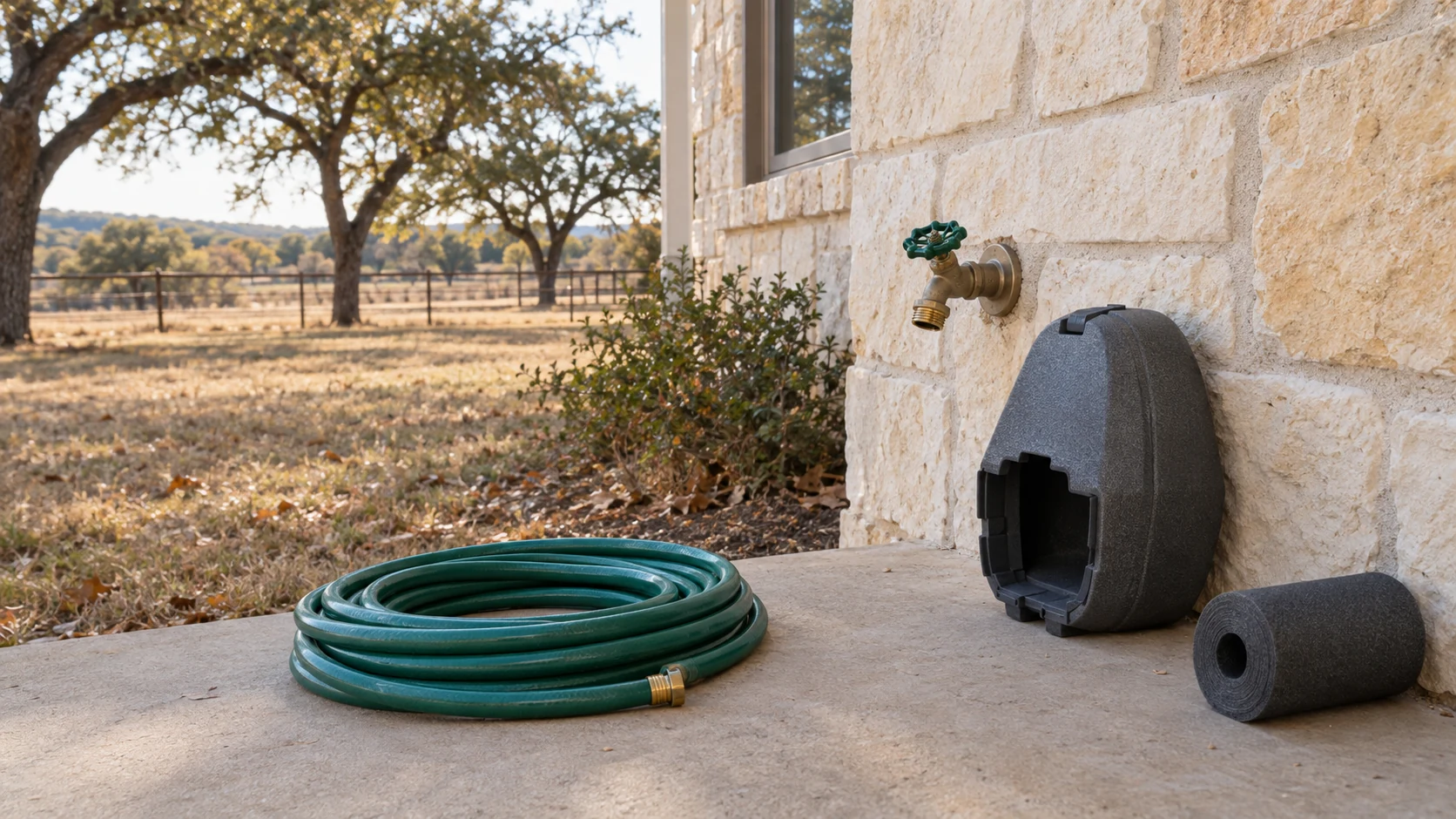
Frost-free bibs only stay frost-free if nothing is attached to the spout over the winter. On rural properties where a hose sits on the bib year round, the bib body holds water, freezes and splits, then works perfectly all spring until the day the wall gets wet. A wet wall found in summer often traces back to January.
Underground Supply Line Leaks on Acreage
A long buried run between a well house, a pressure tank, a home, a barn and a set of hydrants is the single most expensive thing to diagnose badly. Here is how we narrow it down instead of guessing.
First, isolate. Nearly every acreage system has more valves than the owner realizes: one at the pressure tank, often one at the house entry, sometimes one at a barn tee. Shutting those in sequence and watching pressure behavior tells us whether the loss is upstream or downstream of a given point, which can eliminate hundreds of feet of trench from the search.
Second, pressure test. We isolate a segment, bring it to a test pressure and watch whether it holds. A segment that bleeds down steadily has a leak; one that holds is cleared.
Third, listen. Acoustic detection equipment picks up the sound water makes escaping a pressurized line, and that sound travels along the pipe. On a quiet morning in open pasture there is less background noise fighting the instrument than in town. We work the line, mark the loudest point, then confirm with a second pass from a different direction.
The surface clues are worth learning to read as well:
- A green stripe or green patch during a dry stretch, especially one that follows a straight line across the yard.
- Soil that stays soft or slightly sunken after a week with no rain.
- A steady faint hiss at the pressure tank when nothing in the house is running.
What we ask people not to do is rent a trencher and start digging where the grass looks greenest. Water travels. It follows the bedding sand in the trench or runs along a rock shelf, then surfaces at a low spot a long way from the break.
Irrigation Leaks That Hide All Summer
Irrigation is the best camouflage a leak gets. The system runs before dawn, wet ground in the morning is expected, and nobody is standing in the failing zone when it runs.
The failures we find most often on Peaster and Parker County systems:
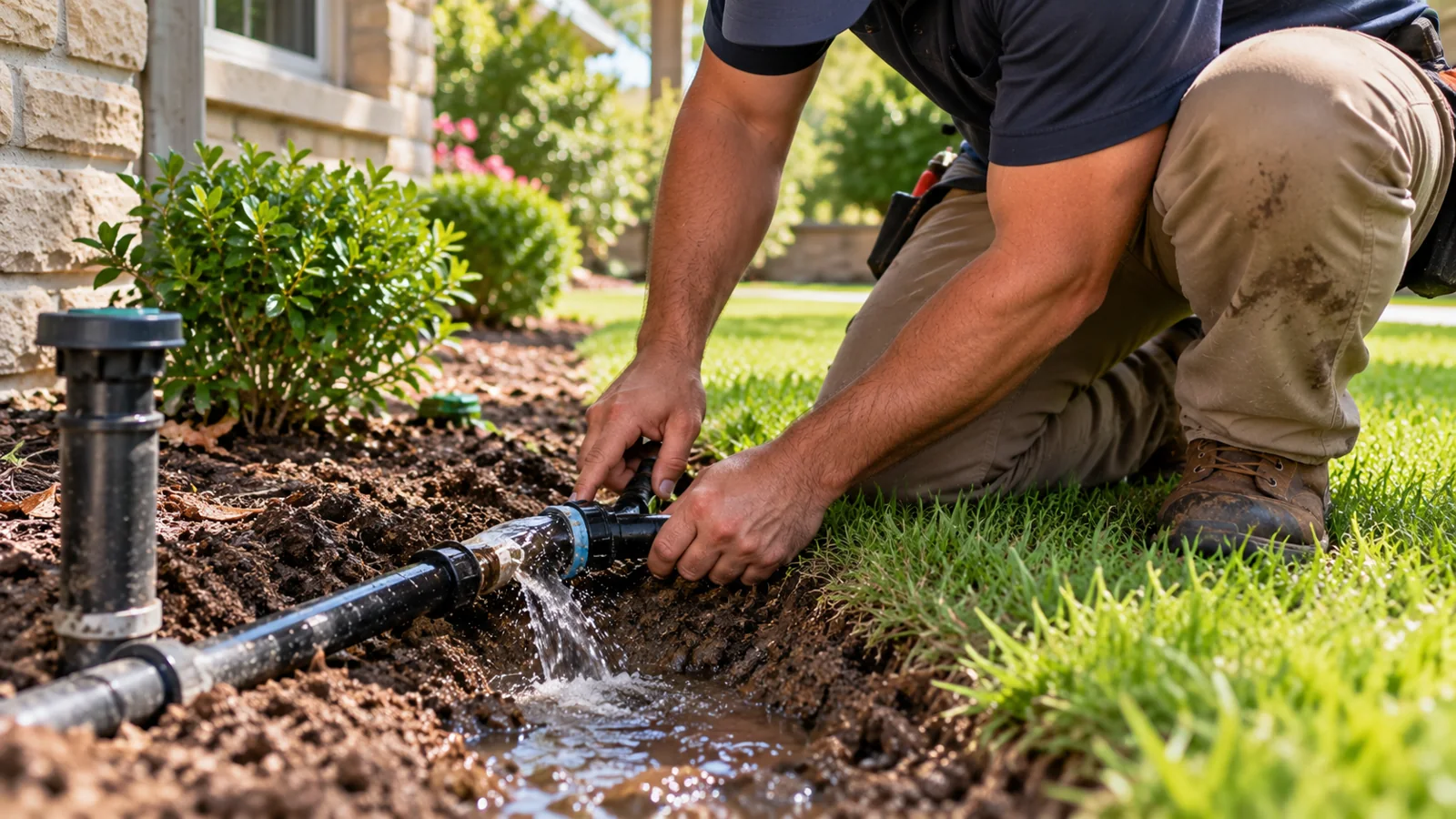
- A cracked lateral line, usually from soil movement or a previous shovel strike, which shows as one zone with weak spray at the heads and a soggy area that never dries.
- A valve that does not fully close, so a zone weeps continuously between cycles. This is the most wasteful one, because it runs twenty-four hours a day.
- A broken or missing head at the low point of a zone, which drains the whole lateral every time the zone shuts off.
- A leaking connection where the irrigation system ties into the house supply, which is also where the backflow device sits.
- Pressure set too high for the heads, which fogs the spray, wastes water, and puts the fittings under continuous stress.
The first diagnostic is worth doing yourself. Run each zone manually in daylight, one at a time, and walk it. Note heads that mist instead of throw, heads that do not pop up, and any place where water comes out of the ground rather than out of a head. Then shut the controller off entirely. Anything still wet a day later is a leak on the pressurized side, not a scheduling problem.
We handle irrigation and outdoor leaks as part of our standard residential plumbing work, which also covers hose bibs and outdoor plumbing, pipe repair, full re-pipes, and the supply line replacement that sometimes turns out to be the honest answer.
How a Leak Shows Up on a Well System
This is what trips up people who moved to acreage from a city lot. On a well system, a leak does not show up as a bill. It shows up as pump behavior.
A well pump fills a pressure tank, shuts off, and stays off until enough water is drawn to bring pressure down to the cut-in point. When the system is tight, the pump should not run at all overnight. When there is a leak anywhere on the pressurized side, the pump keeps topping the system back up. The signature is:
- The pump kicks on with nothing running in the house, at regular intervals.
- The interval gets shorter over weeks as the leak grows.
- The pump runs longer each time, and eventually runs almost continuously during peak demand.
- Pressure at the far end of the system sags, especially at a barn or a distant hydrant.
Short cycling matters beyond wasted water. Every start is hard on the pump motor and the pressure switch contacts, and a waterlogged pressure tank with a failed bladder produces a similar rapid-cycle symptom. Part of our job is telling the two apart, which we do by isolating the house from the tank and watching what each does.
Iron Horse's service area includes Peaster and the western Parker County communities on our service areas page. For a well-fed property, describe the plumbing symptoms and pump behavior when calling. Confirm the scope of plumbing service; pump motors, electrical controls, and work inside the well may require a dedicated well-system contractor rather than an assumed plumbing repair.
Septic-Adjacent Cautions
Most Peaster acreage runs on septic, and that changes how we approach outdoor water in two ways.
First, a supply leak near a drain field is easy to misread. A wet area downhill of the house might be a broken supply line, or a drain field that has stopped accepting water. To tell them apart, shut the supply down and watch. If the area dries with the water off and returns when it comes back on, it is a supply leak. If it stays wet regardless, the problem is on the waste side.
Second, a supply leak that saturates soil near a drain field can overload that field and push a working septic system into failure. That is the real cost of ignoring a slow buried leak out here: it can turn a leak repair into a septic problem.
Repair or Replace: How We Reason About It
We get asked this on nearly every buried-line call, and we would rather give people the real logic than a sales answer.
Repair the line when:
- The pipe material is modern and in good condition, and the failure is at a single identifiable point such as a fitting, a clamp or a shovel strike.
- The rest of the run pressure-tests tight after the repair.
- The line is accessible and the repair does not require opening a long trench anyway.
Replace the run when:
- We are back at the same property for the third leak on the same line. Multiple pinholes in one run means the pipe itself is at the end of its service life, and each repair is buying a short extension.
- The pipe is old galvanized, brittle poly, or has been repaired with a series of clamps over the years.
- The failure sits under a driveway, a slab or a structure, and the excavation needed to patch it is most of the work of replacing it.
- Pressure at the far end stays poor even when the system is tight, which suggests the interior of the pipe has scaled down.
There is an honest middle ground. Sometimes the right call is to repair the failure now to stop the loss and plan the full replacement for a cooler month, and we will say so when that is the case. We provide free estimates on most non-emergency plumbing projects, so seeing both options clearly does not obligate anyone.
What Makes an Outdoor Leak an Emergency
Not every leak needs someone out the same night. These do:
- Water entering the structure, whether at a slab edge, in a crawl space, or inside a wall behind a hose bib.
- A break severe enough that the well pump cannot maintain pressure, which leaves the property without usable water.
- A leak near an electrical panel, a pump control box or a well house with standing water in it.
- Any situation where the main shutoff cannot be found or will not close.
That last point deserves a minute on a calm day. Find your shutoffs, at the pressure tank, at the house entry, at the barn tee, and confirm they actually turn. A valve that has not moved in fifteen years often will not move when it matters. Replacing a seized shutoff is a far better scheduled job than a two in the morning job.
Our scheduled service runs Monday through Saturday, 7am to 6pm, and we provide 24/7 emergency service including weekends and holidays. For anything urgent, call the Weatherford office directly at (817) 599-8765 rather than waiting on a message. Calling us directly is the fastest way to get a truck moving.
A Practical July Walk-Around for Peaster Properties
Thirty minutes with a notepad in July catches most of what we get called about in September.
- Check accessible hose bibs without forcing stiff or corroded valves. Watch the spout, the handle, the vacuum breaker and the wall behind it, and disconnect hoses that are not in use.
- Check every frost-free hydrant in the pasture. A hydrant that stays wet at the base after shutting is leaking below grade.
- Run each irrigation zone manually in daylight and walk it.
- With everything off, stand at the pressure tank for ten minutes and listen. The pump should not start.
- Look for green stripes, soft ground and washouts, and note where they sit relative to your known line routes.
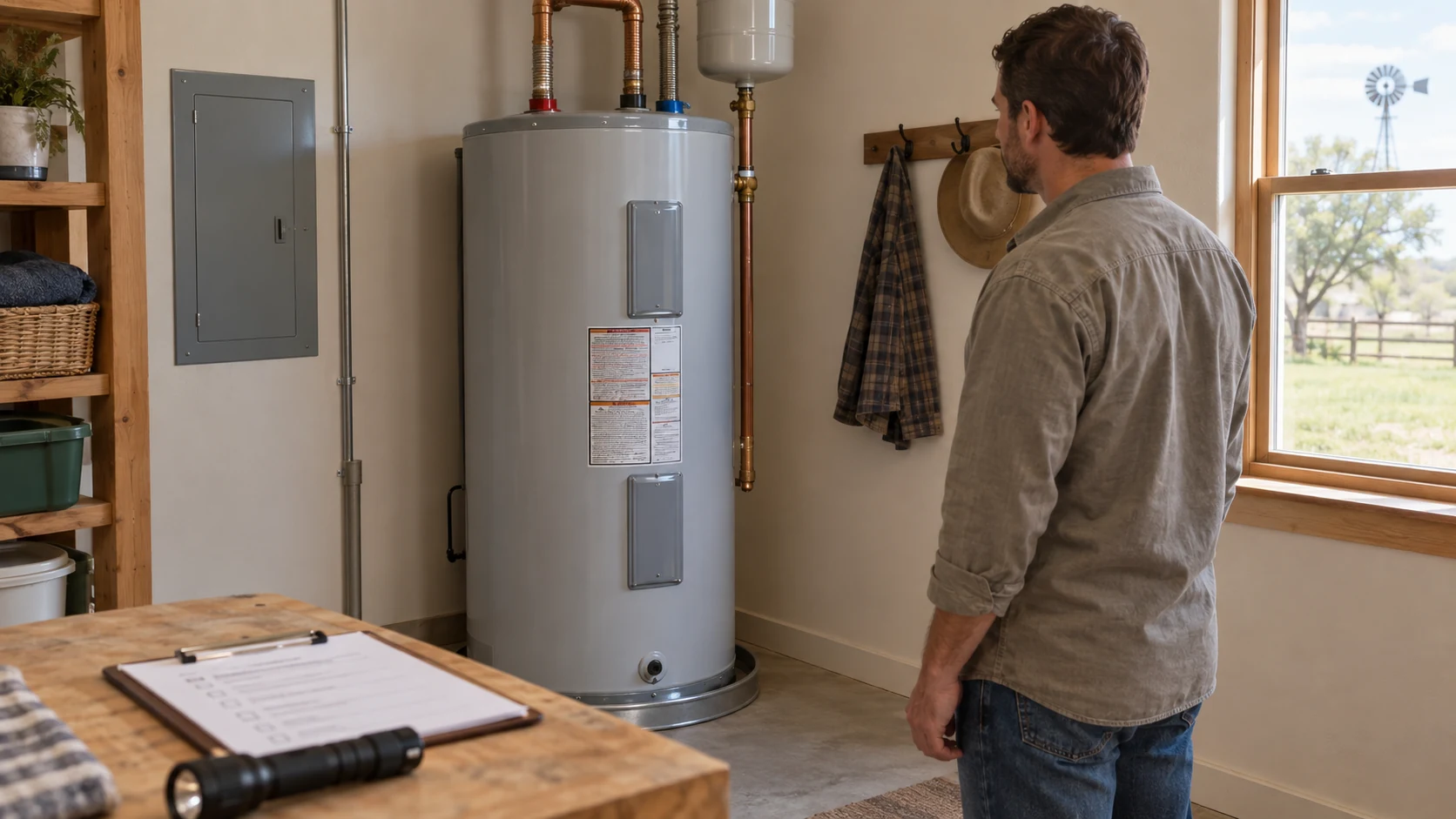
- Check the water heater's surroundings while you are at it. A slow drip at the base of a tank or from a pressure relief discharge line is easy to miss in a garage or a utility building, and on well water heaters take more abuse than they do in town. Our water heater service covers repair, correctly sized replacement and tankless work on rural systems.
Anything on that list that reads wrong is worth a phone call. These are small repairs caught in July and much larger ones after a wall or slab has been wet for two months.
Working With Iron Horse in Peaster
We are Iron Horse Mechanical and Plumbing Services, locally owned and serving this area since 2014 under Texas Master Plumber License M-37011. Our Weatherford office at 2319 Tin Top Rd covers Peaster, and outdoor and irrigation leak work is a regular part of that route through the summer.
When you call, describe three things: what you see, when you see it, and what is running when it happens. Those answers usually tell us whether to bring acoustic equipment, pressure testing gear or both, and whether this is a hose bib rebuild or a buried line search. More on local coverage is on our Peaster service area page, and our frequently asked questions page answers the scheduling questions we hear most.
To get on the schedule for leak detection or outdoor plumbing repair in Peaster, call our Weatherford office at (817) 599-8765.
Frequently Asked Questions
How do I know if I have an underground water leak on my Peaster property?
On a private well, the clearest sign is the pump cycling on when nothing is running, at shorter and shorter intervals. Other indicators are a green stripe across dry ground, soil that stays soft with no rain, weak pressure at distant hydrants or barns, and a faint continuous hiss at the pressure tank. Any one of those is worth investigating before it grows.
Why is my outdoor faucet leaking only when I turn it on?
That points to a split in the pipe behind the faucet rather than a bad washer at the spout. It is common on frost-free hose bibs that had a hose left attached through a freeze. Water escapes inside the wall while the valve is open and stops when you close it, so the wall gets wet without anything visible outside. It should be opened up and repaired promptly.
Can you find an irrigation leak without digging up the yard?
Usually, yes. We start with zone-by-zone testing and pressure isolation to narrow the failure to one lateral, then use acoustic detection equipment to pinpoint it. That reduces the excavation to a small, targeted opening instead of a long trench. Non-invasive location first, digging last, is the order we work in on every outdoor leak call.
Does a water leak affect my septic system in Peaster?
It can. A supply line leaking near a drain field saturates the soil the field depends on to absorb effluent, which can push a functioning septic system into failure. That is one reason we do not recommend leaving a slow buried leak alone on acreage. We also locate lines before digging so a leak search near a field does not damage the septic laterals.
Do you handle outdoor plumbing repairs outside normal business hours?
Yes. Scheduled service runs Monday through Saturday, 7am to 6pm, and we provide 24/7 emergency service including weekends and holidays. Water entering a structure, a break that leaves the property without pressure, or a shutoff valve that will not close are all reasons to call the Weatherford office at (817) 599-8765 right away rather than waiting for morning.
Should I repair the buried line or replace the whole run?
If the pipe is in good shape and the failure is at one identifiable point, repair it. If we have fixed two or three leaks on the same run, or the pipe is old galvanized or brittle poly patched with clamps, replacement is the honest answer because each patch only buys a short reprieve. We walk through both options and provide free estimates on most non-emergency projects.
Topics